You have finished a hard session. Your legs are heavy, your muscles are inflamed, and tomorrow’s training is already on the calendar. The question every serious gym-goer eventually asks is simple: what actually helps you recover faster – a whole-body cryotherapy session or an ice bath at home?
Both use cold. But they are not the same treatment, and the differences matter more than most people realise.
How whole-body cryotherapy works
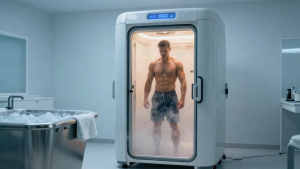
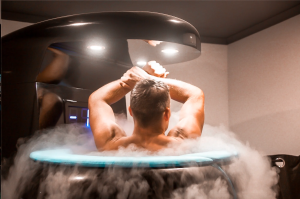
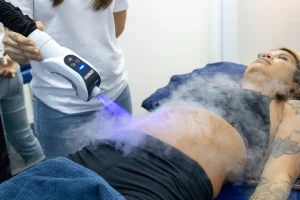
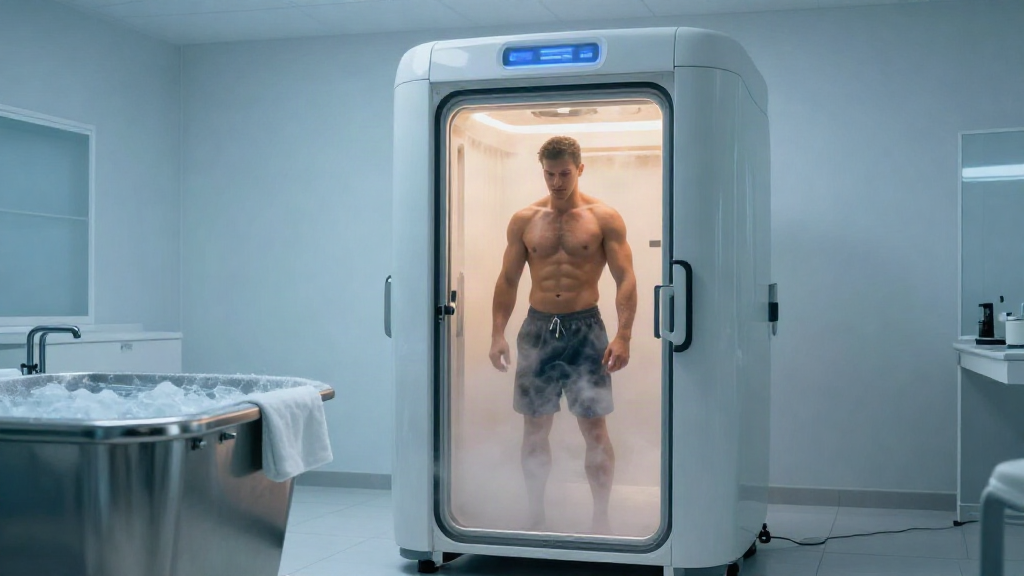
Whole-body cryotherapy (WBC) exposes the body to extremely cold, dry air for a very short time – typically two to four minutes at temperatures between -110°C and -160°C, inside a purpose-built chamber.
Because the air is dry rather than wet, the cold is far more tolerable than the temperature alone suggests. Your skin temperature drops quickly, blood vessels constrict, and then – as you warm back up – circulation surges. That cycle is what drives the recovery benefits: reduced inflammation, less perceived soreness, and a faster return to feeling normal.
Sessions are short, controlled, and supervised. You book in, you are in and out in minutes, and you carry on with your day.
How ice baths work
Cold-water immersion (CWI) – the ice bath – is the method most athletes know. You submerge your lower body, or the whole body, in water cooled to roughly 10-15°C for anywhere between five and fifteen minutes.
The water conducts heat away from your body far more efficiently than air does, which is why an ice bath at 12°C feels brutal while a cryotherapy chamber at -130°C is manageable. The physiological response overlaps with cryotherapy: vasoconstriction, reduced blood flow to the muscles, and a drop in the inflammatory response that follows intense exercise.
The trade-off is duration. Fifteen minutes in ice-cold water is fifteen minutes, plus filling, chilling, draining and cleaning up afterwards.
Temperature and time: the practical difference
This is where the two methods really diverge.
| Whole-body cryotherapy | Ice bath | |
|---|---|---|
| Temperature | -110°C to -160°C (dry air) | 10-15°C (water) |
| Time per session | 2-4 minutes | 5-15 minutes |
| Felt discomfort | Brief, intense, short-lived | Prolonged and often uncomfortable |
| Consistency | Precise, machine-controlled | Varies with ice, water and room temperature |
| Setup | Booked session at a clinic | Bath, ice, thermometer, clean-up |
Cryotherapy wins on time and precision. An ice bath wins on accessibility if you already have a bath and a freezer full of ice.
Comfort, consistency and control
Recovery only works if you actually do it – and consistency is where DIY ice baths tend to fall short. Water temperature drifts as the ice melts. A bag of ice from the shop is not a calibrated dose. And after a long day, the thought of fifteen minutes in near-freezing water is enough to make most people skip it entirely.
With cryotherapy, every session is the same. The chamber holds its temperature, the timing is fixed, and there is no guesswork. That repeatability makes it far easier to build recovery into your week rather than treating it as an occasional heroic effort.
What the evidence says
Research on both methods points in a similar direction: cold exposure after demanding exercise reduces the sensation of soreness and markers of muscle damage, and can support a quicker return to training.
The important nuance is that cryotherapy compresses a comparable cold stimulus into a fraction of the time. Where studies compare the two directly, whole-body cryotherapy tends to match cold-water immersion for perceived recovery and soreness while taking two to four minutes rather than ten to fifteen.
The honest caveats are worth stating. Cold exposure is a recovery tool, not a substitute for sleep, nutrition and sensible programming. And timing matters – if your goal is muscle growth, regularly icing immediately after resistance training may blunt the adaptation you are training for. Both cryotherapy and ice baths are best used strategically, around competition, heavy blocks, or days when you need to back up hard sessions.
Who gets the most from each
Choose whole-body cryotherapy if you are time-poor. If you train early, work full days, and need recovery that fits into a twenty-minute window, a two-to-four-minute session is realistically something you will stick to. It also suits anyone who dislikes prolonged cold or struggles to tolerate an ice bath at all.
Choose an ice bath if convenience and cost are the priority. If you already have a bath at home and enjoy the ritual, cold-water immersion is an effective, low-cost option. It is also easy to use for a single area, such as calves and quads after a long run.
Use both if you compete. Many athletes keep an ice bath for the odd emergency and book cryotherapy as their routine recovery slot.
Why recovery-focused athletes choose Evolve
At Evolve Fitness Studio, cryotherapy sits alongside the rest of our recovery and performance services rather than standing alone. That matters, because recovery is rarely about one intervention.
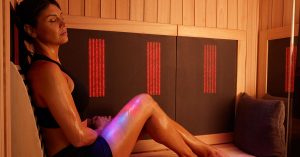
If you want to understand what is actually happening in your body – vitamin and mineral levels, hormonal balance, key health markers – our blood testing and diagnostics give you real data to work from, reviewed by GMC-registered doctors. If your goal is body composition, our weight loss programme pairs nutrition guidance with training support. And if you simply want to unwind while your muscles recover, the infrared sauna complements cold therapy beautifully: heat for circulation and relaxation, cold for inflammation and soreness.
How to decide
Ask yourself three questions:
- How much time do you realistically have? Under fifteen minutes, cryotherapy. Twenty minutes or more, an ice bath works.
- Will you actually do it consistently? Whichever option you will repeat three times a week beats the one you dread.
- What are you recovering from? Post-competition or heavy training blocks suit either. General wellbeing and relaxation may be better served by heat.
Frequently asked questions
Is cryotherapy colder than an ice bath?
Yes – dramatically. Cryotherapy chambers run between -110°C and -160°C, but the air is dry, so the exposure is brief and manageable. Ice baths sit around 10-15°C, and the water makes the cold feel far more intense over time.
How long does each session take?
A cryotherapy session is two to four minutes. An ice bath is typically five to fifteen minutes, plus preparation and clean-up.
Can I replace cryotherapy with an ice bath?
For many people, yes – cold-water immersion delivers a similar recovery effect. Cryotherapy simply delivers it faster, at a controlled temperature, with no setup.
How often should I use cold therapy?
Most people recovering from regular training use it two to four times a week, ideally after the hardest sessions rather than every single day.
The bottom line
An ice bath and whole-body cryotherapy both work. The difference is how much time and discomfort you are willing to trade for the same result. If recovery needs to fit around a busy life, cryotherapy gets you the cold exposure in minutes rather than quarters of an hour – and consistency is what turns recovery into performance.
Ready to make recovery part of your routine? Book a cryotherapy session at Evolve Fitness Studio and find out how much better tomorrow can feel.