Starting Is Supposed to Feel Good, Not Frightening
Most people who want to get fitter already know what they should do. They know movement helps their energy, their sleep, their mood and their long-term health. What stops them is rarely the exercise itself. It is the idea of walking into a room full of strangers who seem to know exactly what they are doing, while you stand there wondering where to put your bag.
That feeling has a name in most people’s heads: not belonging. It is the quiet voice that says everyone will be watching, that you are too unfit to begin, that you should probably get in shape before you join a gym. If any of that sounds familiar, you are not alone – and you are not being unreasonable. Gym intimidation is one of the most common reasons people delay starting a fitness routine for months or even years.
The good news is that the atmosphere of the place you choose matters far more than the equipment on the floor. A friendly, inclusive studio does not just make exercise more pleasant. It removes the intimidation factor almost entirely, and that is what turns a first visit into a habit.
Why the Gym Feels Intimidating in the First Place
Gym anxiety is usually built from a few very specific worries, and naming them makes them easier to dismantle.
- Fear of judgement – worrying that other members are watching your technique, your pace or your body.
- Not knowing the rules – where to go, what to wear, how the machines work, whether you need to book a class.
- Feeling like the least fit person in the room – especially if you are returning after injury, pregnancy or a long break.
- Being sold to – the suspicion that someone will push you into a package you do not want.
- Not seeing anyone like you – walking in and realising that nobody looks, moves or trains the way you do.
None of these are really about fitness. They are about psychological safety. When a space feels safe, people take their first step. When it does not, even the best-equipped gym in the country stays empty of new members.
What a Friendly, Inclusive Atmosphere Actually Looks Like
Inclusion is not a slogan on a wall. It shows up in small, practical details that you notice within the first five minutes.
A welcome, not an induction speech
At a genuinely welcoming studio, someone greets you by name, shows you where the changing rooms and water are, and asks what you would like to get out of coming. You are a person with a reason for being there, not a membership number being processed.
Mixed-ability sessions as the default
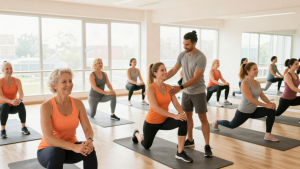
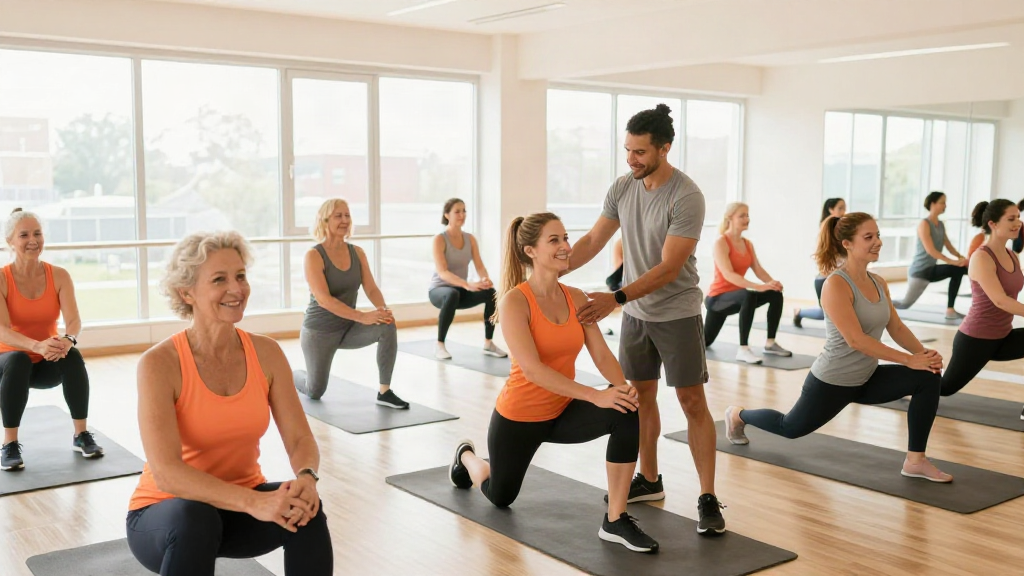
When classes are designed for a mix of ages, fitness levels and body types, nobody stands out as the beginner. A good coach offers the same movement at two or three levels, so the person next to you can push hard while you build confidence at your own pace – and both of you are doing the class properly.
Coaching that corrects without criticising
The difference between encouragement and criticism is enormous for a beginner. Inclusive coaching is direct about technique and generous about progress. It is the kind of guidance that leaves you thinking “I can do this” rather than “I am not good at this”.
No assumptions about your body or your goals
Members come to a studio for very different reasons: getting stronger, losing weight, recovering after having a baby, training for a run, managing a health condition or simply feeling better in their own skin. An inclusive studio asks what your goal is instead of assuming it.
A wide range of ways to move
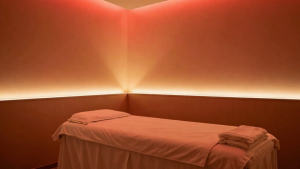
Some people will never love a group class. Others need a low-impact option, or a recovery day that is gentler than a training day. Offering personal training, indoor cycling, boxfit and recovery services such as infrared sauna and cryotherapy under one roof means your routine can adapt to your body and your week, rather than the other way round.
The First Visit: What to Expect From a Beginner-Friendly Studio
If you have been putting off that first step, it helps to know what an unpressured start looks like.
- A conversation before a workout. You talk through your history, what you are nervous about and what you would like to change. No one starts you on a punishing circuit to prove a point.
- A simple, honest starting point. Your first session should feel achievable, not testing. The goal of week one is showing up again, not exhaustion.
- A plan you understand. You leave knowing what you will do next time and why, so the gym stops feeling like a mystery.
- Permission to go slowly. Progress in fitness is not linear, and a good studio builds in easier days – including recovery sessions that support rather than strain your body.
- Zero pressure to be anything other than a beginner. Everyone in that room was a beginner once, and the culture of the studio should make that obvious.
That last point is the one that changes everything. When a space is genuinely welcoming to people who are new, unfit, returning after a break or working around a body that has changed, the intimidation simply has nowhere to live.
What Removes Intimidation Does Not Remove Progress
One worry people raise is that a friendly studio must be a soft option. The opposite is true. The most consistent training comes from people who feel comfortable showing up – which is exactly what a supportive, inclusive environment produces. Feeling at ease is not the opposite of results; it is the mechanism that produces them.
It is also why studios that pair training with recovery and wellbeing support work so well for beginners. When your routine includes services like infrared sauna, cryotherapy, IV vitamin therapy or blood testing alongside your sessions, fitness stops being a test of willpower and becomes part of looking after yourself. You are building a sustainable routine rather than surviving a programme.
For anyone weighing up a supervised approach alongside everything else, Evolve’s Weight Loss Program and Body Transformation options combine personalised training with nutrition guidance and ongoing support – useful when you want structure without the pressure of figuring it all out alone.
Your First Step Is Small on Purpose
You do not need to be fit to start. You need a place where starting is made easy, and people who are genuinely pleased you turned up.
If the intimidation factor has been the thing holding you back, treat it as information rather than a verdict. It means the environment you have experienced so far has not been built for you – not that fitness is not for you. A friendly, inclusive studio removes that barrier, and what is left is the part that actually matters: a routine you are happy to return to.
Book a drop-in class, come for a first look, or simply ask what would suit your body right now. There is no audition. There is no minimum fitness requirement. There is just a room full of people who decided to begin, and a team that is there to make your first session feel like the easiest decision of your week.